
In the last entry I told you about Swansea – the sensory room, the beanbags, the moment I realised that football might actually be our thing. What I didn’t tell you is what happened when we got brave and started going further. Away days. Proper ones. New grounds, new towns, new people – and, every single time, new reasons to believe that football really is getting this right.
This is the story of three grounds, three brilliant clubs, and the people who made it all possible.
Exeter City – St James Park
Exeter was our first proper away trip. Kya and I drove down to watch them play Wrexham, which sounds simple enough until you remember this involves the M5, a new city, a ground we’ve never been to, and approximately seven thousand things that could go wrong. But here’s the thing – before we’d even left the house, someone at Exeter had already made sure most of them wouldn’t.
Jeanne Jones, Exeter’s Disability Liaison Officer, was incredible. She secured our tickets, recommended the Family Stand, and arranged for us to sit at the end of a row so we could slip out easily if Kya needed a break. She even texted us updates about traffic on the M5. Traffic updates! From a football club! That’s the kind of detail that doesn’t appear in any accessibility brochure, but makes the difference between a family arriving calm and a family arriving already halfway to meltdown.
We dropped Nanny and Mummy off for some shopping in the city centre (everyone has their own match day routine) and headed for the ground. From the moment we walked in, the staff were brilliant – warm, welcoming, and not remotely fazed by anything. The Family Stand had a fantastic atmosphere. Loud, yes. Exciting, yes. But never overwhelming. The fans around us were friendly and inclusive, and the ground itself was spotless with easy access to everything we needed.
Wrexham won 2–0. Not the result Exeter wanted, but honestly? The result was the least memorable part of the day. Kya had the time of her life. She was settled, happy, and completely at ease in a ground she’d never set foot in before. That’s not luck. That’s preparation, and it’s people like Jeanne who make it happen.
She texted us traffic updates before we’d even left the house. That’s not a football club doing the minimum. That’s someone who genuinely cares.
Cheltenham Town – Whaddon Road
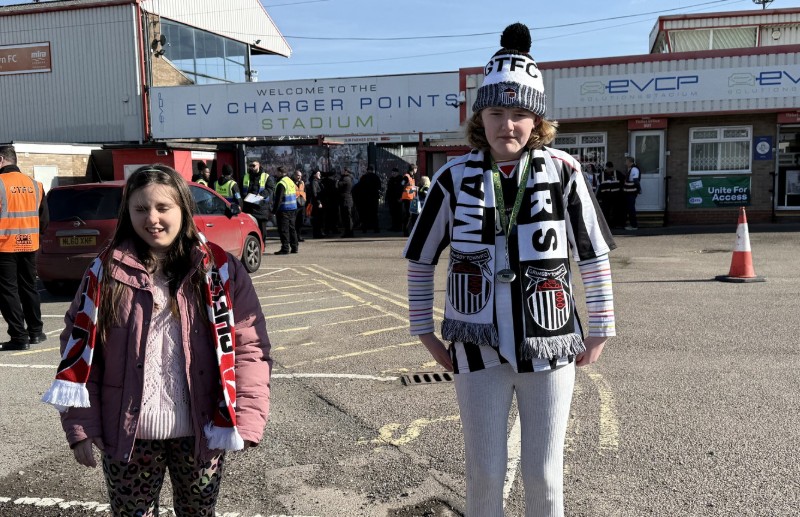
Cheltenham was special for about six different reasons, but I’ll start with the most important one: Martha came with us. Martha is Kya’s best friend, her dad Chris is one of mine, and Martha is – and I need you to understand the scale of this – a huge Grimsby Town fan. Not casually interested. Not “oh, I follow the results.” Full kit. Scarf. Singing. The lot.
So naturally, when Cheltenham drew Grimsby at home, there was no question. We were going. All four of us.
It also happened to be Level Playing Field’s Unite For Access day, which raises awareness of accessibility in football. We met Kaylene and her colleagues from Cheltenham Town, and from start to finish they were outstanding. Kaylene helped us book tickets, made sure we were seated comfortably, and checked in on us throughout the day – not in a clipboard-and-lanyard way, but in a genuine, human, “is everyone having a good time?” way. The stewards were the same. Helpful, approachable, and always nearby if we needed anything.
For anyone who feels anxious about taking a child with sensory needs to a football match – this is exactly the kind of support that makes it possible. Knowing someone is looking out for you changes everything. It takes the edge off. It turns “I don’t know if we can do this” into “actually, we’ve got this.”
After refuelling on burgers and chips (essential match day fuel – no exceptions), we joined the Grimsby fans in the away end. Martha was in her element. The atmosphere was electric. Cheltenham took the lead before half-time, and for a brief, nervous moment, Chris and Martha went very quiet. But Grimsby pulled one back in the second half and it finished 1–1. Handshakes all round.
The highlight of Martha’s day? Meeting her hero, Danny Rose. I don’t think her feet touched the ground for the rest of the afternoon. Kya, meanwhile, was perfectly content with her chips, her headphones, and the general chaos of it all. Two girls, two very different match day experiences, both completely happy.
Two girls. One lives for the singing. The other lives for the chips. Both completely happy. That’s what an accessible match day looks like.
Newport County – Rodney Parade
Newport was the most recent trip – another away day with Martha and Chris, another Grimsby match (Chris is nothing if not committed), and another ground that got it right. Newport v Grimsby at Rodney Parade.
By this point, we had a routine. Contact the club early. Explain what we need. Ask about seating, access, quiet spaces, steward support. And every time – every single time – the response has been the same: “Of course. Let us help.” Newport were no different. Friendly, accommodating, and clearly used to looking after families with additional needs. No fuss, no hoops to jump through, just people being decent.
Martha got her Grimsby fix. Kya got her stadium fix. Chris and I got ninety minutes where nobody needed anything from us except to sit down and watch football. For any parent reading this, you know how rare that is.
The people behind it all
I want to talk about the organisations that make this possible, because they don’t always get the credit they deserve.
Every club has a Disability Supporters Association (DSA) or a disability liaison officer – and they are, without exaggeration, the reason families like ours can walk through the turnstile. They’re the ones who answer your nervous first email. They’re the ones who arrange the seats, check on you during the game, and remember your name when you come back. At Exeter it was Jeanne. At Cheltenham it was Kaylene. At Swansea it was Cath. These are not paid consultants. Most of them are volunteers. They do it because they believe football should be for everyone.
And then there’s Level Playing Field. If you haven’t heard of them, please look them up. They’re a charity that campaigns for accessible, inclusive match day experiences for disabled fans across the country. They work with clubs at every level – Premier League down to non-league – pushing for better facilities, better training, and better attitudes. Their Unite For Access days, like the one we attended at Cheltenham, shine a light on what’s working and what still needs to change. They’re brilliant, and they’re worth supporting.
Between the DSAs and Level Playing Field, there is a network of people quietly, persistently making football a place where disabled fans don’t just attend – they belong. I didn’t know any of this existed two years ago. Now I can’t imagine match day without it.
If you’re thinking about it
If you’ve read this far and you’re wondering whether your child could handle a live match – here’s what I’d say. Contact the club. That’s it. Just send an email. Tell them about your child, what they find difficult, what helps. Ask what they can offer. Every club we’ve contacted has responded with warmth and practical help. Not one has made us feel like a burden.
You can also contact Level Playing Field directly – they can tell you what facilities your nearest club has and help you take that first step. That first visit is the hardest. After that, it’s just football.
Three grounds. Three clubs. Three sets of people who treated Kya like she belonged. Because she does. Football should be for everyone. And slowly, brilliantly, it’s getting there.
Share this story