
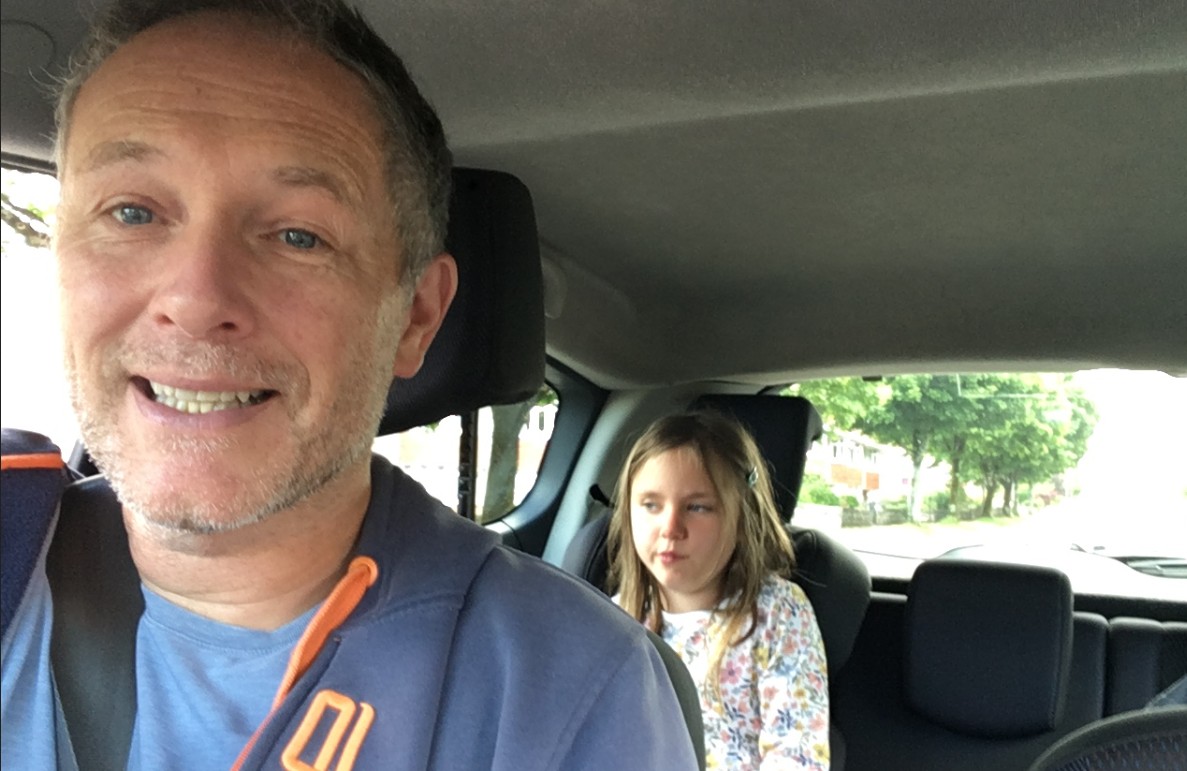
I need to talk about car parks. I know – not exactly riveting. But if you’re a parent of an autistic child, you just nodded, because you already know what’s coming.
Before the Blue Badge, every trip out started the same way. Drive to wherever we were going. Circle the car park. Circle it again. Find a space four rows back, squeezed between two SUVs. Unbuckle Kya. And then the sprint – because Kya doesn’t walk across car parks. She bolts.
It’s not naughtiness. It’s not her being difficult. She has no sense of danger. None. A reversing car, a moving trolley, a van pulling in – she doesn’t register any of it. Her brain doesn’t flag those things the way yours or mine does. So the second her feet hit tarmac, she’s off. And I’m chasing her with one hand holding her bag of daily things, the other trying to lock the car, shouting her name while she runs toward absolutely nothing in particular with the biggest smile on her face.
It’s terrifying. Every single time.
But here’s the other thing nobody tells you: Kya is a sponge for my emotions. If I’m stressed, she knows. She can’t explain how she knows, but she feels it – in my grip on the steering wheel, in my voice, in the tension in my shoulders as I reverse into a tight spot for the third attempt. And when she picks up on that stress, she starts to unravel. The humming gets louder. The rocking starts. And sometimes, before we’ve even got out of the car, we’re already in meltdown territory.
The trip is over before it began. We’d drive home in silence, me feeling like a failure, Kya exhausted, both of us drained by a car park.
Then we got the Blue Badge.
I’m not going to pretend it’s magic. It’s a bit of blue card with a photo on it. But what it does is simple and enormous: it lets us park close. Right by the entrance. Wide bay, easy access, three steps from the door. That’s it. That’s the whole thing.
And it changes everything.
No more circling. No more squeezing into impossible spaces. No more white-knuckle reversing while Kya picks up on every ounce of my frustration. I pull in, badge on the dash, engine off. Deep breath. Kya unbuckles. I take her hand. Three steps to the door. We’re in. Calm. Safe. Ready for the actual day to begin.
The difference it makes to Kya is obvious – less distance means less danger, less overwhelm, less chance of things going sideways before we’ve started. But the difference it makes to me is just as big. I arrive relaxed. My shoulders are down. My voice is soft. And because I’m calm, Kya is calmer too. She reads me like a book – always has – so when I’m steady, she’s steady.
A Blue Badge might look like a parking permit. But for us, it’s safety, calm, and one less battle before the day even starts.
I know some people look at us – a dad and a child who looks “fine” – walking from a blue bay and wonder why we need it. Not every disability is visible. Kya’s legs work perfectly. It’s the world between the car and the door that doesn’t work for her. The badge bridges that gap. Literally.
Last Tuesday we went to the supermarket. Parked by the entrance, walked in holding hands, bought what we needed, walked back. No drama. No bolting. No meltdown. Kya even stopped to look at the flowers by the door – just stood there, smelling a bunch of daffodils with her eyes closed. A tiny, perfect moment that only happened because the hard part had been taken away.
That’s what a Blue Badge really is. It’s not a privilege. It’s a deep breath.
Share this story