
Kya is non-verbal. I should explain what that means, because most people get it wrong. It doesn’t mean she can’t speak. It doesn’t mean she’s silent. It means she doesn’t communicate the way most people do. She doesn’t ask questions. She doesn’t start conversations. She doesn’t tell you about her day or explain how she’s feeling. Language – the easy, automatic, back-and-forth kind that most of us take for granted – doesn’t come naturally to her.
When she was small, she didn’t say anything at all. Not a word. Not “Mum,” not “Dad,” not “no.” Nothing. Other children her age were babbling away, pointing at things, asking “why” four hundred times a day. Kya was quiet. Completely, utterly quiet. She communicated in her own way – pulling your hand, leading you to what she wanted – but words? Words were nowhere.
She didn’t cry, either. Not like other children. She could bump herself, fall over, scrape her knee on the pavement – nothing. Not a sound. Not a whimper. Unless she really hurt herself, she’d barely grumble. Most parents would think that was a blessing. For us, it was terrifying. Because if she couldn’t tell us she was in pain, and she wasn’t going to cry about it, how would we ever know? If her tummy was upset, if she had an earache, if something was really wrong – we had no way in. No signal. Just silence, and the constant worry that sat behind it.
We didn’t know if they’d ever come. That’s the honest truth. We hoped. We waited. We tried everything – speech therapy, Makaton signs, picture cards. And we played music. Lots of music. In the car especially, because the car was one of the few places Kya seemed properly relaxed. Something about the movement, the hum of the engine, the world sliding past the window. She’d sit in her car seat, calm and happy, and we’d play Peppa Pig songs on repeat.
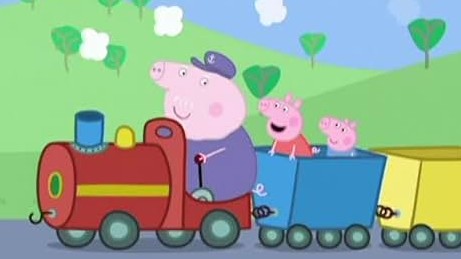
Grandpa’s Little Train was her favourite. We must have played it a thousand times. Every car journey, every school run, every trip to the shops. The same song, the same cheerful melody, the same words rolling round and round. Kya would sit quietly, looking out the window, and we assumed she was just enjoying the sound. Background noise. Something familiar and safe.
Then one afternoon, Sarah and Kya came to pick me up from work. I got in the car, the song was playing – as always – and we pulled away. A few rounds in, I heard something from the back seat. Quiet at first. Almost not there. I looked at Sarah. She looked at me. We both went completely still.
Kya was singing.
Not humming. Not babbling. Singing. The actual words. Grandpa’s Little Train, coming out of our little girl who had never spoken a word in her life. Her voice was soft and slightly out of tune and absolutely the most beautiful thing I have ever heard.
Sarah pulled over. We just sat there, the two of us in the front, trying not to cry, while Kya sang along in the back like she’d been doing it forever. She hadn’t noticed anything had changed. For her, it was just Tuesday. For us, it was the day the world cracked open.
Her first words weren’t “Mum” or “Dad.” They were the lyrics to a Peppa Pig song. And they were perfect.
The words didn’t come flooding after that. It wasn’t a dam breaking. It was more like a tap – a slow drip that gradually got steadier. She started with single words. “Drink.” “Park.” “More.” Each one felt like a gift. Not sentences. Not questions. Just clear, deliberate words that told us what she wanted.
That’s still how it works now. Kya doesn’t do small talk. She doesn’t do chitchat. But if you ask her the right question in the right way, she’ll give you an answer. The trick is you have to start with her name – “Kya, what do you want for tea?” – and then give her options. “Fish fingers, sausages, or pasta?” She’ll think about it for a moment, and then: “Pasta.” Clear as day. One word. Decision made.
If you don’t use her name first, she won’t register that you’re talking to her. If you don’t give her options, the question is too open and she can’t process it. But give her the right framework and she’ll tell you exactly what she wants. She’s not lost for words. She just needs them delivered in the right shape.
The bit that makes me laugh – and it happens all the time – is when we meet someone new. They’ll crouch down and ask Kya how old she is, or what her name is. She won’t answer. She’ll look straight through them like they’re furniture. So we’ll say, gently, “Kya’s non-verbal – she doesn’t communicate like most people.” The person nods, smiles, completely understands.
And then, three seconds later, Kya will look at me and say “Swings.”
The person’s head will snap round. “I thought you said she was non-verbal?” And I’ll stand there trying to explain that non-verbal doesn’t mean no words – it means communication doesn’t work the usual way. She can’t answer your question about her age. But she can absolutely tell me she wants the swings. Those are two completely different things, and Kya doesn’t see why the first one matters when the second one is clearly more important.
She’s right, honestly. The swings are more important.
Her words are coming on. Slowly, steadily, on her own terms. She says more now than she did a year ago, and a year ago she said more than the year before that. They’re not sentences. They’re not conversations. They’re single words, or sometimes two, dropped into the world at exactly the right moment with exactly the right meaning. And every single one of them started with a little girl in the back seat of a car, singing along to Grandpa’s Little Train like it was the most natural thing in the world.
I still can’t hear that song without welling up. I probably never will.
Share this story